Learning outcomes: Discuss an AI application for medical imaging
- Understand clinic use
- Know dataset quality and diversity
- Explore performance metrics
- Know validation strategies
- Find clinic evaluation
- Apply ethical and regulatory requirements
- Deploy an application in the real world
Requirements
- Each student will select one AI application for medical imaging
- Evaluate and summarize the application based on the 7 key points in the previous slide
- If the information of a key point is not available yet, you should discuss how it can be done with references to relevant AI applications.
- Word limit: max 1500 words; figures, graphs, tables, illustrations, in-text citations, references, etc. are not counted for the limit; penalty applies if exceeding the limit
Requirements
- uAI recommended – demo access is provided
- Other AI applications acceptable
- Address the 7 key points given in the guidelines
- Rephrase essential concepts to show your understanding, e.g. performance metrics
- Use section titles as recommended: The scope of application, Training datasets, Performance metrics, validations, Clinical evaluation outcome, Ethical and regulatory, Deployment and improvement, Reference
Write My Assignment
Hire a Professional Essay & Assignment Writer for completing your Academic Assessments
Native Singapore Writers Team
- 100% Plagiarism-Free Essay
- Highest Satisfaction Rate
- Free Revision
- On-Time Delivery
1. The scope of application
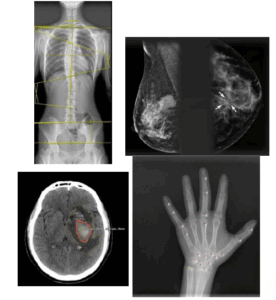
- Imaging modality, e.g. CT, MRI, X-ray, Angio etc.
- Patient population, pediatric vs adult, inpatient vs outpatient etc.
- Use conditions: e.g. lesion detection, scoliosis analysis, bone age assessment, fractures, pneumonia, PE, ICH, etc.
2. Dataset quality and diversity
- Number of image, age-range, race-range, to represent the target population
- Annotation quality, e.g. ground truth was established by experts (radiologists)
- Bias assessment, e.g. demographic variation, equipment differences
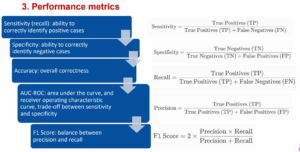
3. Performance metrics
4. Validation strategy
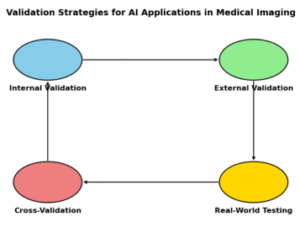
- Internal validation: the same dataset was used for the training and validation
- External validation: the training dataset is different from the validation dataset, e.g. from different institutions or populations
- Cross-validation: the dataset was split into multiple parts and training was done multiple times
5. Clinical evaluation
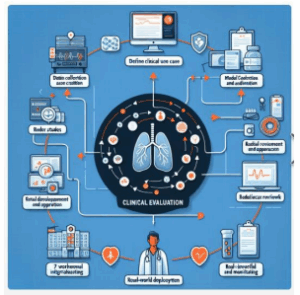
- Expert studies: AI performance vs the experts (radiologists)
- Workflow integration: Evaluate how AI fits the clinical workflows
- Decision support: Assess and quantify what AI improves/brings to the clinical
practices, e.g., reduce workload, improve workflow, provide better confidence, etc.
Buy Custom Answer of This Assessment & Raise Your Grades
Get A Free Quote
6. Regulatory and ethical considerations
- Compliance: HAS (Singapore), FDA (USA), NMPA (China) CE Mark (European), Number of image, age-range, race-range, to represent the target population
- Transparency: How are the AI decisions understood?
- Data privacy: compliance with PDDA, HIPPA, GDPR, PIPL, etc
7. Real-world deployment
- Pilot studies: deploy the application in a limited clinical setting
- Monitoring: Track performance over time and across different settings
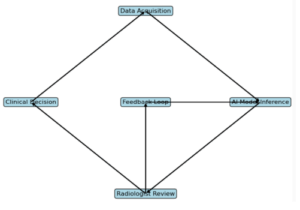
- Feedback loop: Incorporate clinician feedback for continuous improvements
8. References
www.mendeley.com/download-reference-manager/windows
- APA 7th Edition
- In-text citations whenever appropriate to avoid plagiarism
- A list of references at the end
- The words of references and in-text citations are excluded from the word limit
- Recommendation: Use Mendeley reference manager or Endnote to help you manage references; Mendeley reference manager is free.
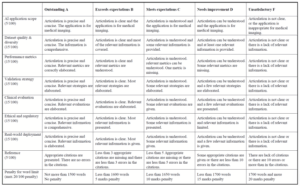
Grading Rubric – healthcare Informatic Assignment
Stuck with a lot of homework assignments and feeling stressed ?
Take professional academic assistance & Get 100% Plagiarism free papers
Get A Free Quote
The post AI in Medical Imaging Assignment: Clinical Evaluation and Deployment of uAI for Diagnostic Support appeared first on Singapore Assignment Help.

Need help with your own assignment?
Our expert writers can help you apply everything you've just read — to your actual assignment.
Get Expert Help Now →